The global demand for fresh vegetables is increasing rapidly as consumers become more health conscious and aware of nutritional value. Vegetables are essential for balanced diets, yet delivering them efficiently from farms to markets remains a complex challenge. Fresh produce is highly perishable, and even minor inefficiencies in supply chains can result in significant losses for farmers, traders, and retailers.
To meet growing demand and reduce waste, agricultural systems must evolve toward more structured, transparent, and efficient vegetable supply chains. Modern approaches focus on coordination, data-driven decision-making, and improved logistics to ensure that vegetables reach consumers in optimal condition.
Understanding the Complexity of Vegetable Supply Chains
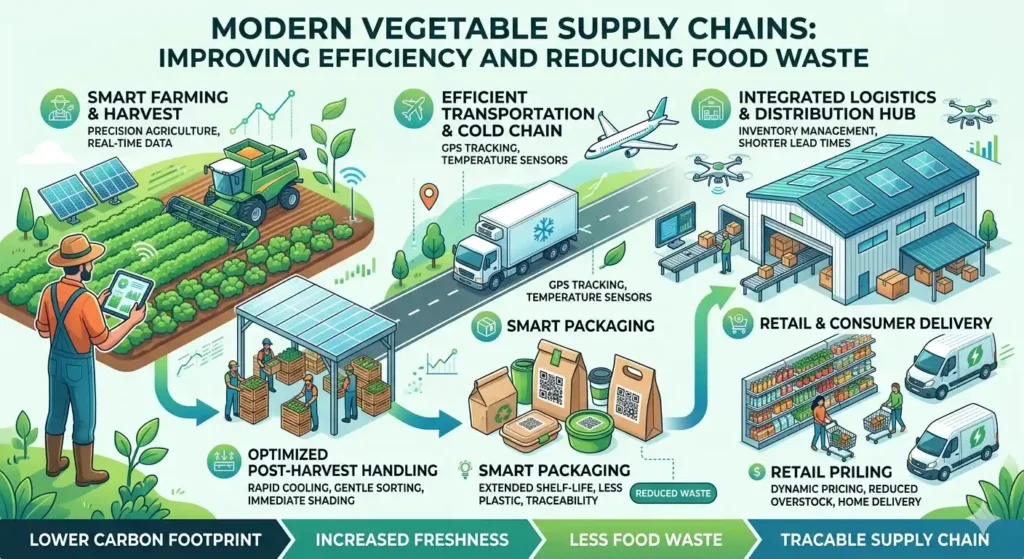
Vegetable supply chains involve multiple stages including farming, harvesting, sorting, transportation, wholesale distribution, and retail sales. Each stage introduces potential risks such as delays, damage, or loss of freshness. Managing these stages effectively requires careful planning and strong coordination among all participants.
In traditional systems, vegetables often pass through several intermediaries, increasing both cost and time. Reducing unnecessary delays and improving communication between stakeholders can significantly enhance efficiency.
Importance of Speed and Handling in Fresh Produce
Fresh vegetables begin to lose moisture and nutrients immediately after harvest. Proper handling, quick transportation, and controlled storage conditions are essential to maintain quality. Even a few hours of delay in high temperatures can reduce shelf life and affect market value.
Efficient logistics systems help preserve freshness and reduce spoilage. This directly benefits farmers by ensuring their produce reaches the market in sellable condition.
Market Intelligence and Price Transparency
Reliable market information is a key factor in modern agricultural systems. Daily mandi rates and price trends help farmers, traders, and retailers make informed decisions. When market data is accessible, it reduces uncertainty and improves pricing transparency.
Monitoring vegetable prices allows businesses to plan procurement strategies and manage inventory more effectively. This helps maintain stability in both supply and pricing.
Reducing Food Waste Through Better Coordination
Food waste is a major issue in fresh produce markets. Vegetables that are not sold quickly often spoil and become unusable. Improving coordination between production and demand can significantly reduce these losses.
Better forecasting, efficient distribution networks, and improved storage practices can help ensure that more produce reaches consumers instead of being wasted.
Role of Technology in Agricultural Markets
Technology is transforming vegetable supply chains by providing real-time data, improving communication, and enhancing logistics management. Digital platforms allow farmers and traders to track prices, monitor supply trends, and coordinate deliveries more effectively.
These advancements make agricultural systems more efficient, transparent, and responsive to market demand.
Global Perspective on Sustainable Agriculture
International organizations emphasize the importance of improving supply chains to strengthen food security and reduce losses. The Food and Agriculture Organization of the United Nations supports initiatives that enhance agricultural efficiency and sustainability worldwide.
Adopting modern supply chain practices can help create more resilient food systems that benefit both producers and consumers.
Supporting Structured Vegetable Distribution
Organized vegetable sourcing systems play an important role in improving market efficiency. By creating direct and transparent connections between farms and buyers, these systems reduce delays and ensure consistent quality.
For reliable and structured fresh vegetable sourcing, visit Annadata Krishi Shop .
The Future of Vegetable Supply Chains
The future of fresh vegetable markets will depend on efficiency, innovation, and collaboration. Farmers, traders, logistics providers, and technology platforms must work together to build systems that reduce waste and improve productivity.
As global demand continues to grow, investing in organized and sustainable supply chains will be essential for ensuring consistent access to fresh and nutritious food.
Fresh vegetables are not just agricultural products; they represent the efforts of farmers, the efficiency of supply systems, and the foundation of healthy communities. Strengthening these systems ensures that agricultural value is preserved from farm to consumer.