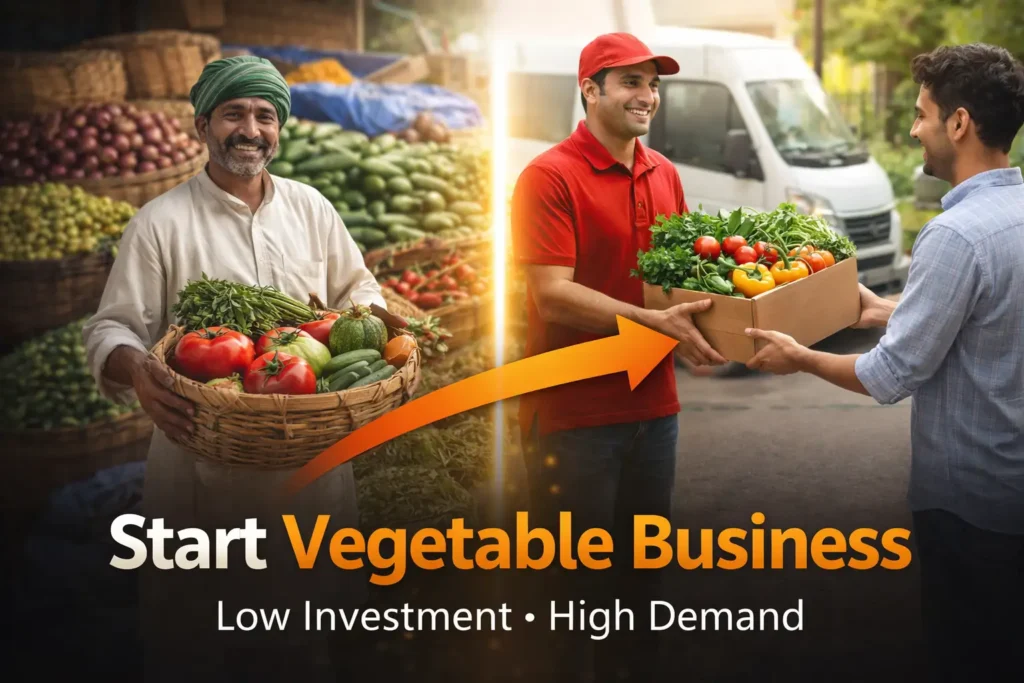
The demand for fresh vegetables is growing rapidly across urban and semi-urban markets, creating a strong opportunity for entrepreneurs to build profitable supply businesses. With increasing awareness about quality, freshness, and direct sourcing, the vegetable supply industry is evolving into a structured and scalable business model.
Starting a vegetable supply business today is not just about buying and selling produce. It involves building an efficient system that connects farmers, wholesale markets, and customers through smart sourcing, logistics, and delivery.
Understanding the Vegetable Supply Business Model
A vegetable supply business operates by sourcing fresh produce from farms or wholesale markets and delivering it to customers such as households, retailers, and hotels. The key to success lies in maintaining quality, consistency, and timely delivery.
Entrepreneurs can start small and gradually scale by building a strong supply network and customer base.
Choosing the Right Sourcing Strategy
Sourcing is the foundation of any vegetable business. You can source directly from farmers or purchase from wholesale mandis depending on availability and pricing.
Direct sourcing often provides better margins and fresher produce, while mandi sourcing offers flexibility and variety.
Setting Up Efficient Logistics
Fast and reliable delivery is critical in the vegetable business. Proper route planning, packaging, and handling ensure that vegetables reach customers in fresh condition.
Even small improvements in logistics can significantly reduce waste and increase profitability.
Building a Customer Base
Customers are the backbone of your business. You can target households, local shops, restaurants, and hotels depending on your scale.
Consistency in quality and timely delivery helps build trust and long-term relationships with customers.
Using Technology for Growth
Technology plays an important role in scaling a vegetable supply business. Online ordering systems, WhatsApp catalogs, and digital payments make operations smoother and more efficient.
Data tracking also helps in understanding demand patterns and optimizing inventory.
Reducing Waste and Increasing Profit
Food waste is one of the biggest challenges in this business. Proper planning, smart sourcing, and quick delivery help minimize losses.
Managing inventory efficiently ensures that you sell maximum stock while maintaining freshness.
Global Perspective on Food Supply Systems
Organizations like the Food and Agriculture Organization of the United Nations highlight the importance of efficient food supply systems in reducing waste and improving farmer income.
Building a structured vegetable supply business aligns with global trends in sustainable agriculture.
Starting with a Structured Platform
Using an organized sourcing system can simplify operations and ensure reliability. It helps maintain quality, streamline delivery, and improve customer satisfaction.
To explore a structured vegetable supply system, visit Annadata Krishi Shop .
The Future of Vegetable Supply Businesses
The vegetable supply industry has strong growth potential. With increasing demand for fresh produce and efficient delivery systems, entrepreneurs who focus on quality and consistency can build scalable businesses.
Adopting smart sourcing and modern logistics will be key to long-term success in this sector.
Starting a vegetable supply business is not just about selling products—it is about building a reliable system that delivers value from farm to customer. With the right approach, this business can grow into a sustainable and profitable venture.