What is Kundru (Ivy Gourd/Tindora)?
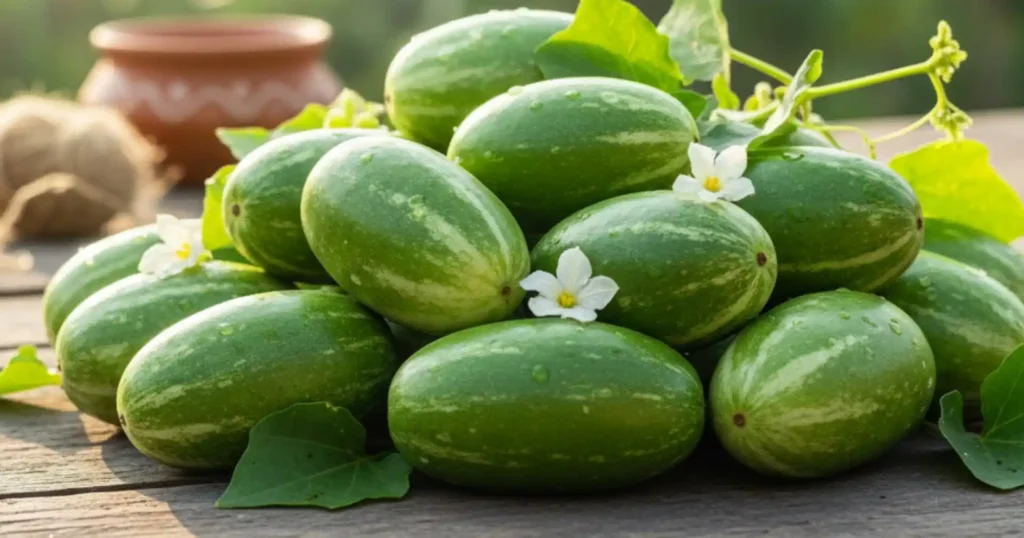
Kundru, scientifically known as Coccinia grandis or Coccinia indica, is a small green vegetable that looks like a mini cucumber. Known by different names across India — kundru in Hindi, tindora in Gujarati, tendli in Marathi, kovakka/kovakkai in Tamil/Malayalam, and ivy gourd in English — this nutritious vegetable has been a staple in Indian cuisine for centuries.
Typically 2-4 inches long with striped green skin, kundru has a slightly crunchy texture and mildly bitter-sweet taste when cooked. It’s incredibly versatile and transforms beautifully whether you fry it, curry it, or pickle it. In Ayurveda, kundru is highly valued for its medicinal properties, especially for diabetes management!
Kundru by Many Names – One Superfood!
| Language/Region | Name | Popular Dish |
|---|---|---|
| Hindi | Kundru / Kanduri | Kundru ki Sabzi |
| English | Ivy Gourd / Tindora | Ivy Gourd Stir-Fry |
| Gujarati | Tindora | Tindora Nu Shaak |
| Marathi | Tendli / Tondli | Tendli Chi Bhaji |
| Tamil | Kovakkai | Kovakkai Poriyal |
| Malayalam | Kovakka | Kovakka Thoran |
| Kannada | Tondekayi | Tondekayi Palya |
| Telugu | Dondakaya | Dondakaya Vepudu |
| Bengali | Telakucha | Telakucha Bhaja |
10 Amazing Health Benefits of Kundru
Lowers blood sugar naturally! Studies show kundru works like insulin, regulates glucose. Ayurvedic diabetes remedy for centuries. Safe daily consumption for diabetics.
Only 20 calories per 100g! High fiber keeps you full. Boosts metabolism naturally. Perfect vegetable for weight management programs.
Rich in Vitamin C, antioxidants strengthen immune system. Fights infections, speeds recovery, protects from seasonal diseases. Natural defense shield!
Lowers cholesterol, regulates blood pressure. Beta-carotene protects heart. Fiber reduces bad cholesterol (LDL). Heart-friendly vegetable!
Antioxidants protect brain cells, improve memory, reduce cognitive decline. Iron ensures oxygen supply to brain. Natural brain food!
Beta-carotene (converts to Vitamin A) improves eyesight. Prevents night blindness, macular degeneration, cataracts. Natural eye protector!
Antioxidants fight free radicals, prevent wrinkles, aging. Vitamin C boosts collagen. Natural detoxifier for clear, radiant skin!
High fiber improves digestion, prevents constipation. Treats stomach disorders, ulcers. Alkaline nature soothes digestive system naturally!
Calcium, phosphorus strengthen bones. Prevents osteoporosis, especially important for women 40+. Maintains bone density naturally!
Natural detoxifier! Cleanses blood, removes toxins from liver, kidneys. Purifies body systems, improves overall health naturally!
💡 Ayurvedic Perspective:
In Ayurveda, kundru is considered a wonder vegetable for diabetes (Prameha). Ancient texts recommend daily consumption for blood sugar control. Modern science confirms this traditional wisdom!
Learn more about ivy gourd’s anti-diabetic properties (scientific study).
Nutritional Profile (Per 100g Kundru)
📊 Packed with Nutrition!
- Calories: 20 kcal (super low calorie!)
- Carbohydrates: 3.1g
- Protein: 1.2g
- Fiber: 1.8g (7% daily value)
- Vitamin C: 23mg (38% DV)
- Vitamin A: 200 IU
- Beta-carotene: 120 mcg
- Calcium: 20mg
- Iron: 1.4mg (8% DV)
- Phosphorus: 40mg
Bonus: Rich in antioxidants (flavonoids, alkaloids) that fight diseases!
5 Delicious Kundru Recipes
🍛 Recipe 1: Classic Kundru Ki Sabzi (Dry)
Prep: 10 min | Cook: 15 min | Serves: 4
Ingredients:
- 250g kundru (ivy gourd)
- 2 tbsp oil
- 1 tsp mustard seeds
- 1 tsp cumin seeds
- Pinch of asafoetida (hing)
- 1/2 tsp turmeric powder
- 1 tsp coriander powder
- 1/2 tsp red chili powder
- 1/2 tsp amchur (dry mango powder)
- Salt to taste
- Fresh coriander for garnish
Method:
- Prep: Wash kundru, pat dry. Cut lengthwise into 4 pieces. Remove seeds if large (small ones keep them).
- Temper: Heat oil, add mustard seeds. When they splutter, add cumin, hing. Let sizzle for 5 seconds.
- Add Kundru: Add cut kundru, turmeric. Mix well, cover, cook on low heat 8-10 minutes. Stir occasionally.
- Spice It: Add coriander powder, chili powder, salt. Mix well, cook uncovered 3-4 mins until slightly crispy.
- Finish: Sprinkle amchur, garnish with coriander. Serve hot with roti/paratha. Simple, healthy, delicious! 😋
Pro Tip: Don’t add water! Kundru releases its own moisture. Dry sabzi tastes best!
🔥 Recipe 2: Crispy Kundru Fry (Restaurant Style!)
Prep: 10 min | Cook: 12 min | Serves: 4
Ingredients:
- 250g kundru, sliced into thin rounds
- 2 tbsp besan (gram flour)
- 1 tbsp rice flour (for extra crunch!)
- 1/2 tsp turmeric
- 1 tsp red chili powder
- 1 tsp chaat masala
- Salt to taste
- Oil for shallow frying
Method:
- Slice Thin: Cut kundru into 2-3mm thin rounds. Thinner = crispier!
- Coat: Mix besan, rice flour, all spices, salt. Toss kundru slices until well coated.
- Fry: Heat oil in pan (shallow frying). Add coated slices in single layer. Don’t overcrowd!
- Get Crispy: Fry on medium heat 3-4 mins per side until golden brown and crispy. Don’t flip too often!
- Serve: Drain on paper, sprinkle chaat masala. Serve hot with ketchup or chutney. Addictive snack! 🤤
👨🍳 3 More Quick Ideas:
- Kundru Achar (Pickle): Cut, mix with spices, mustard oil, lemon. Instant pickle! Lasts 15 days.
- Kundru Curry: Onion-tomato gravy with kundru. Perfect with rice!
- Stuffed Kundru: Slit, fill with masala, shallow fry. Gourmet at home!
How to Select Fresh Kundru
✅ Signs of Fresh Kundru:
- Bright green color: Deep, vibrant green indicates freshness
- Firm texture: Should be hard, not soft or bendable
- Smooth skin: No wrinkles, spots, or blemishes
- Small to medium size: 2-3 inches perfect — tender and less seeds
- No yellowing: Yellow = overripe, will be bitter
- Fresh stem: Green stem end = recently harvested
⚠️ Avoid These Warning Signs:
- Soft/mushy: Overripe, starting to rot
- Yellow or orange color: Too ripe, seeds hard, bitter