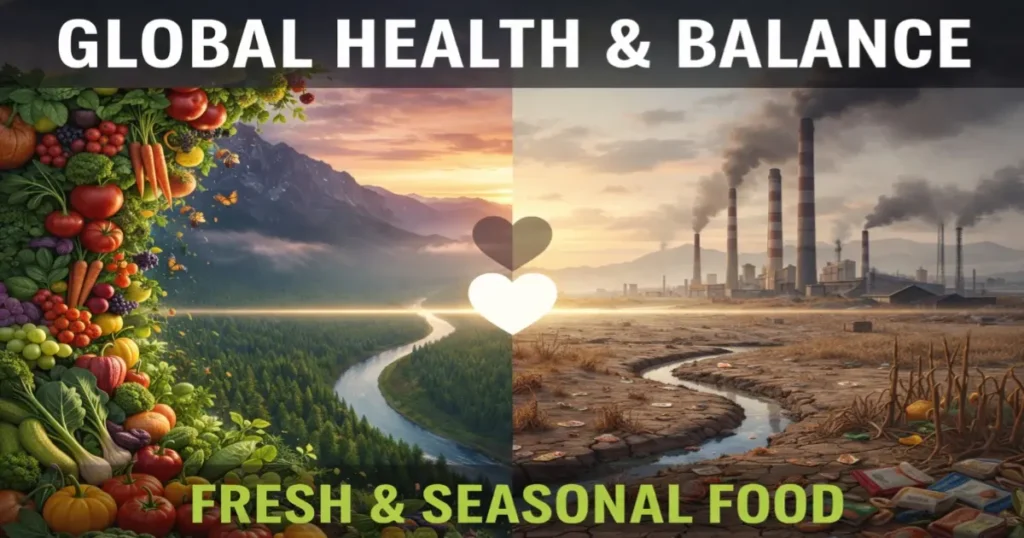
Across the world, people are slowly realizing that food is not just fuel—it is information for the human body. Every bite we take sends signals that affect immunity, energy, mood, and long-term health. Unfortunately, modern food systems often prioritize speed and shelf life over nutrition and freshness.
This growing gap between availability and real nourishment is pushing societies to rethink how food is grown, transported, and consumed.
The Global Shift Away from Natural Food
Over the last few decades, food supply chains have become longer and more complex. Vegetables are harvested early, stored for long periods, and transported across regions and countries. While this ensures year-round availability, it also results in nutrient loss and increased chemical dependency.
Many health experts now link lifestyle diseases to diets dominated by processed and over-stored foods rather than fresh, seasonal produce.
Why Fresh Vegetables Play a Critical Role
Fresh vegetables contain living enzymes, natural fiber, and micronutrients that support digestion and cellular repair. When vegetables are consumed closer to harvest, their nutritional profile remains intact.
- Supports natural immunity
- Improves gut health
- Helps regulate blood sugar levels
- Reduces long-term inflammation
These benefits are universal, regardless of geography, culture, or cuisine.
Seasonal Eating: Nature’s Built-In Intelligence
Seasonal food patterns evolved for a reason. Nature provides specific vegetables in each season that support the body’s changing needs. Ignoring seasonal cycles often leads to nutritional imbalance.
For example, water-rich vegetables help regulate body temperature in warmer months, while root vegetables provide energy and warmth in colder seasons.
The Environmental Impact of Food Choices
Food systems that depend on long-distance transportation contribute significantly to carbon emissions. Choosing locally sourced vegetables reduces fuel usage, packaging waste, and refrigeration demands.
International organizations highlight local food systems as a key component in reducing environmental damage and improving food security.
Reference: FAO – Sustainable Food Systems
Local Farmers and Community Resilience
When consumers buy directly or indirectly from local farmers, they strengthen rural economies. Farmers gain fairer prices, and communities build trust-based food networks.
This model encourages responsible farming practices and helps preserve agricultural knowledge passed down through generations.
Food, Mental Health, and Daily Energy
Nutrition is closely connected to mental clarity and emotional stability. Diets rich in fresh vegetables are associated with improved focus, reduced fatigue, and balanced mood.
Healthy gut bacteria—supported by natural fiber—play a vital role in mental well-being.
Building Better Habits Starts at Home
Healthy food choices are built through daily habits, not occasional decisions. Simple actions like cooking at home, reducing food waste, and choosing fresh ingredients create long-term impact.
Children who grow up in households that value fresh food are more likely to carry those habits into adulthood.
A Vision Rooted in Respect for Food
Annadata Krishi operates on a simple belief: when food is respected, farmers are respected, and health naturally follows.
Learn more about the importance of farm-fresh vegetables: Healthy Life Secrets with Fresh Vegetables
Final Reflection
The future of health does not lie in shortcuts or artificial solutions. It lies in reconnecting with food in its most natural form.
Fresh, seasonal, and locally grown vegetables are not a luxury—they are a necessity for a healthier, more balanced global society.