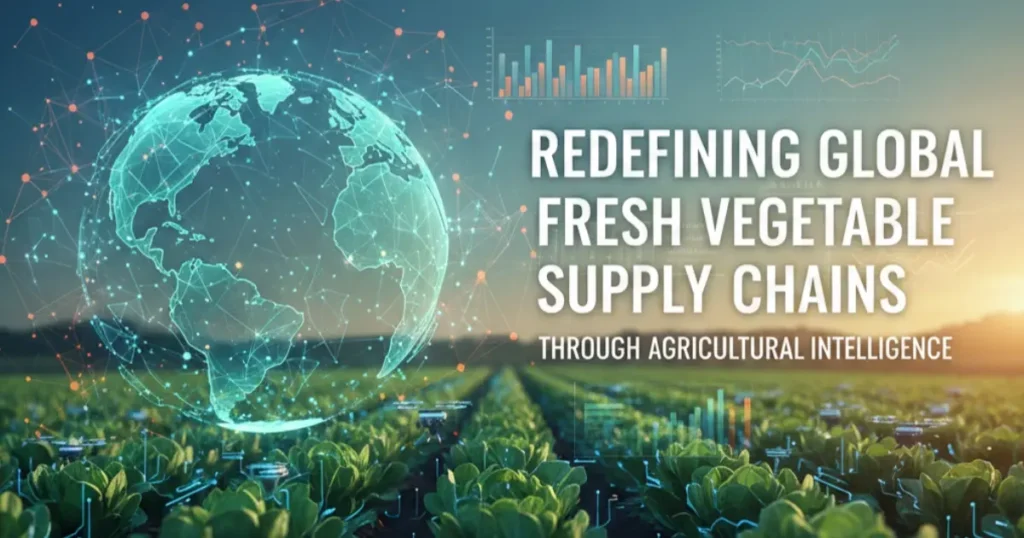
Global agriculture is no longer driven only by production capacity. It is increasingly defined by coordination efficiency, environmental stability, and intelligent distribution systems. As international food networks become more interconnected, fresh vegetable supply chains must evolve beyond traditional trading models.
The Structural Challenge in Fresh Vegetable Supply Chains
Fresh vegetables move through one of the most time-sensitive segments of agriculture. Unlike grains or processed commodities, vegetables demand precision in harvesting, storage, transportation, and market alignment. Even minor delays can result in reduced quality, price volatility, and food waste.
According to the Food and Agriculture Organization (FAO), nearly one-third of food produced globally is lost or wasted each year. A significant portion of this loss occurs within perishable categories such as fresh produce. This highlights a systemic coordination gap rather than a production shortage.
From Volume-Based Farming to Intelligence-Based Agriculture
For decades, agricultural success was measured in yield per hectare. Today, long-term sustainability depends on how effectively supply aligns with real-time demand. Data-informed harvesting cycles, market forecasting, and transparent logistics are becoming central pillars of modern agriculture.
Intelligent agricultural systems reduce overproduction, stabilize farmer income, and maintain consistent freshness for consumers. By aligning production schedules with market demand, volatility is minimized and efficiency improves across the chain.
Transparency as a Competitive Advantage
Global buyers and modern consumers increasingly prioritize traceability and responsible sourcing. Transparency is no longer optional; it is becoming a structural requirement in international trade. Clear sourcing frameworks, disciplined quality control, and ethical distribution practices build long-term credibility.
Trust within agricultural ecosystems is built through consistency, not marketing claims. Reliable supply timelines, standardized quality checks, and responsible partnerships create a foundation for scalable growth.
Resilience in a Climate-Variable Era
Climate variability has introduced uncertainty across growing regions worldwide. Adaptive farming methods, diversified sourcing networks, and predictive planning are essential to maintaining stable vegetable supply. Resilient systems are not reactive; they are proactively designed to absorb disruption.
Resilience also requires balancing productivity with soil health, water management, and ecological responsibility. Sustainable practices are no longer a niche strategy but a necessity for long-term agricultural continuity.
The Role of Coordinated Agricultural Platforms
Modern agricultural platforms must operate as integrated ecosystems — connecting farmers, logistics partners, and markets through structured planning and disciplined execution. Fragmented operations increase inefficiency, while coordinated systems create measurable stability.
At Annadata Krishi, the focus is placed on aligning production intelligence with market precision. Fresh vegetables are treated as time-sensitive assets that require synchronized operations across every stage of the supply chain.
As global food systems continue to evolve, the competitive edge will belong to organizations that combine agricultural experience with operational intelligence. The future of fresh vegetables lies not only in growing them efficiently, but in delivering them responsibly, predictably, and sustainably across markets.